
My Favourite Kinds of Light for Wedding Photography
The photographer you choose will be responsible for capturing your wedding memories beautifully, and light plays an enormous part in how those photographs look and feel.
Every photographer uses light differently. I love working with natural light wherever possible, from soft window light and open shade to glowing golden hour and the final traces of colour after sunset. I also love getting creative with shadows, movement, artificial light and flash when the moment calls for it.
Here are some of my favourite kinds of light to use throughout a wedding day.
Window Light
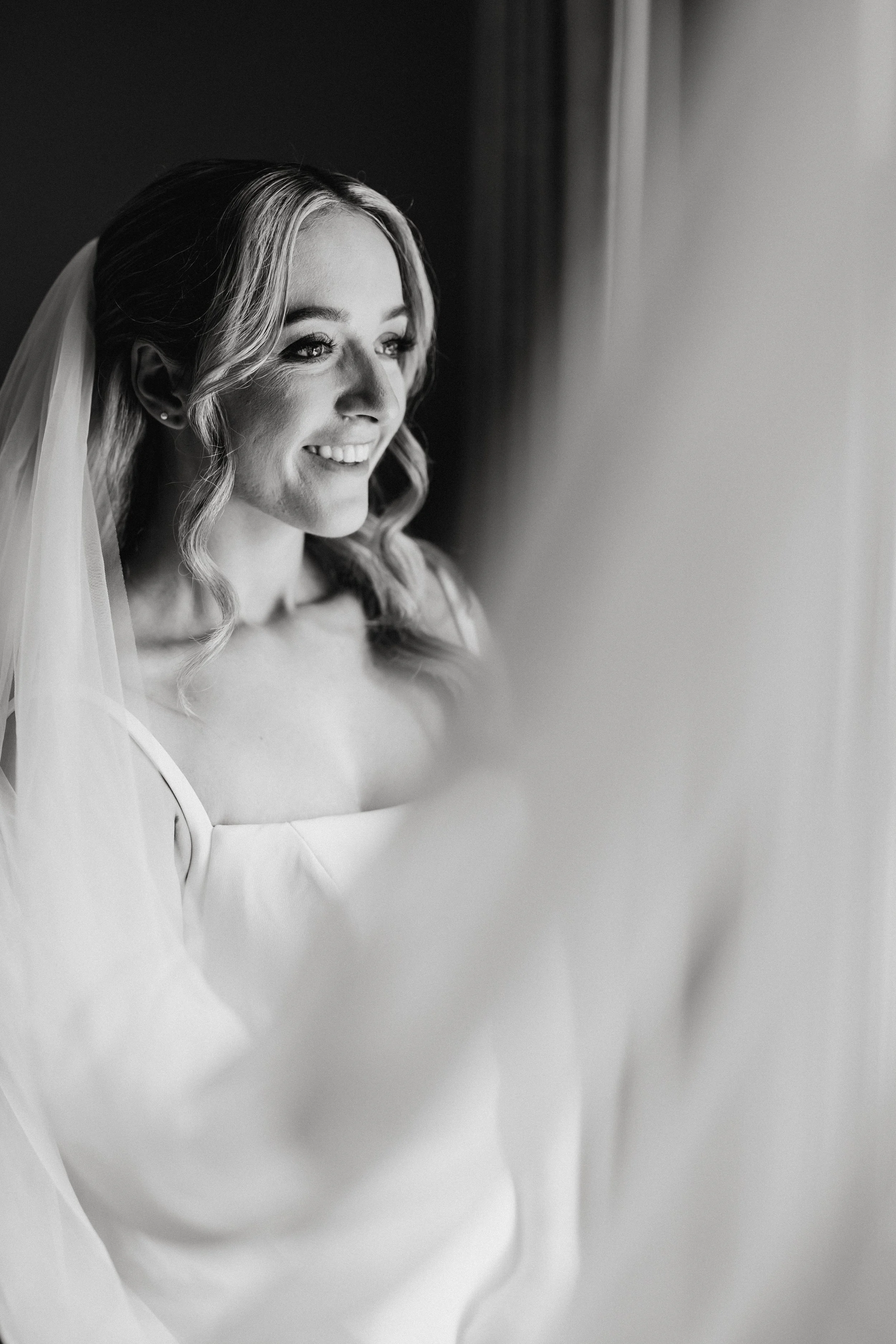
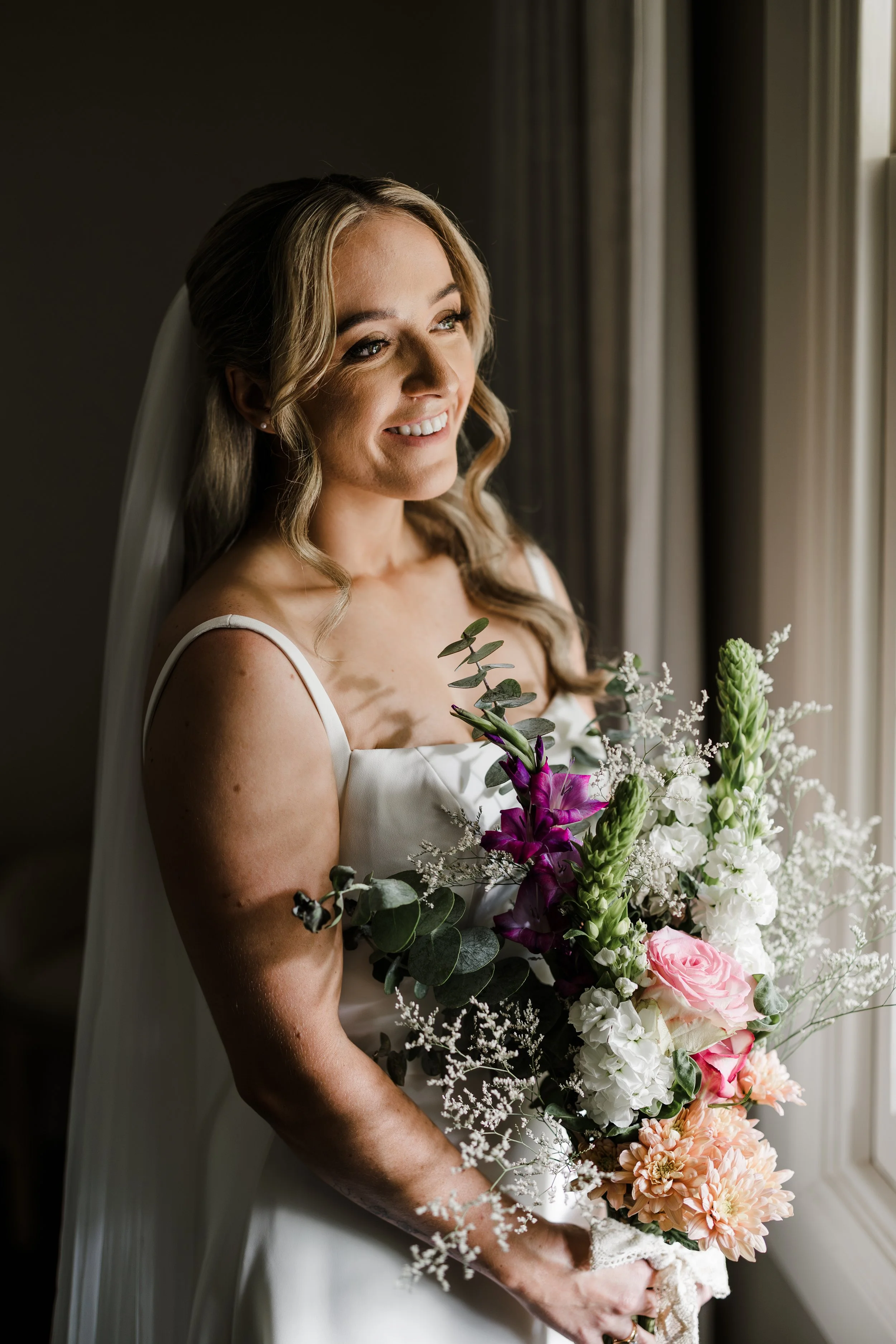
Most couples spend at least part of their wedding morning getting ready indoors, and this is where beautiful window light can make such a difference.
Where possible, I’ll turn off or dim overhead lights, which can introduce competing colours, and use the natural light coming through the window instead. A large window can act almost like a giant softbox, creating light that feels gentle, flattering and full of depth.
Window light is wonderfully versatile. We can create soft side-lit portraits, dreamy backlit photographs, or something a little moodier using angles and shadows. It also works at almost any time of day and gives us a lovely indoor option when the weather outside isn’t cooperating.
Open Shade
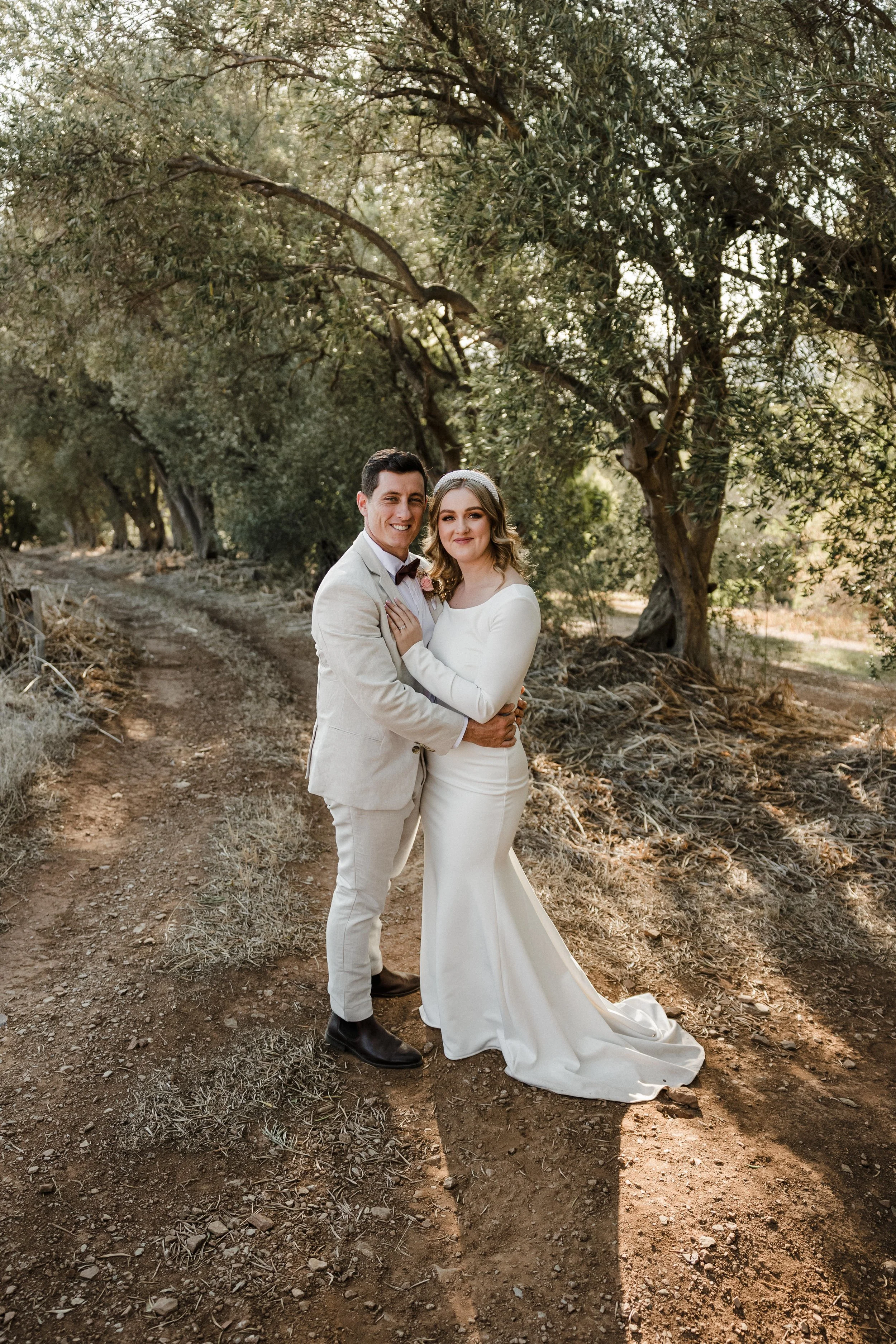
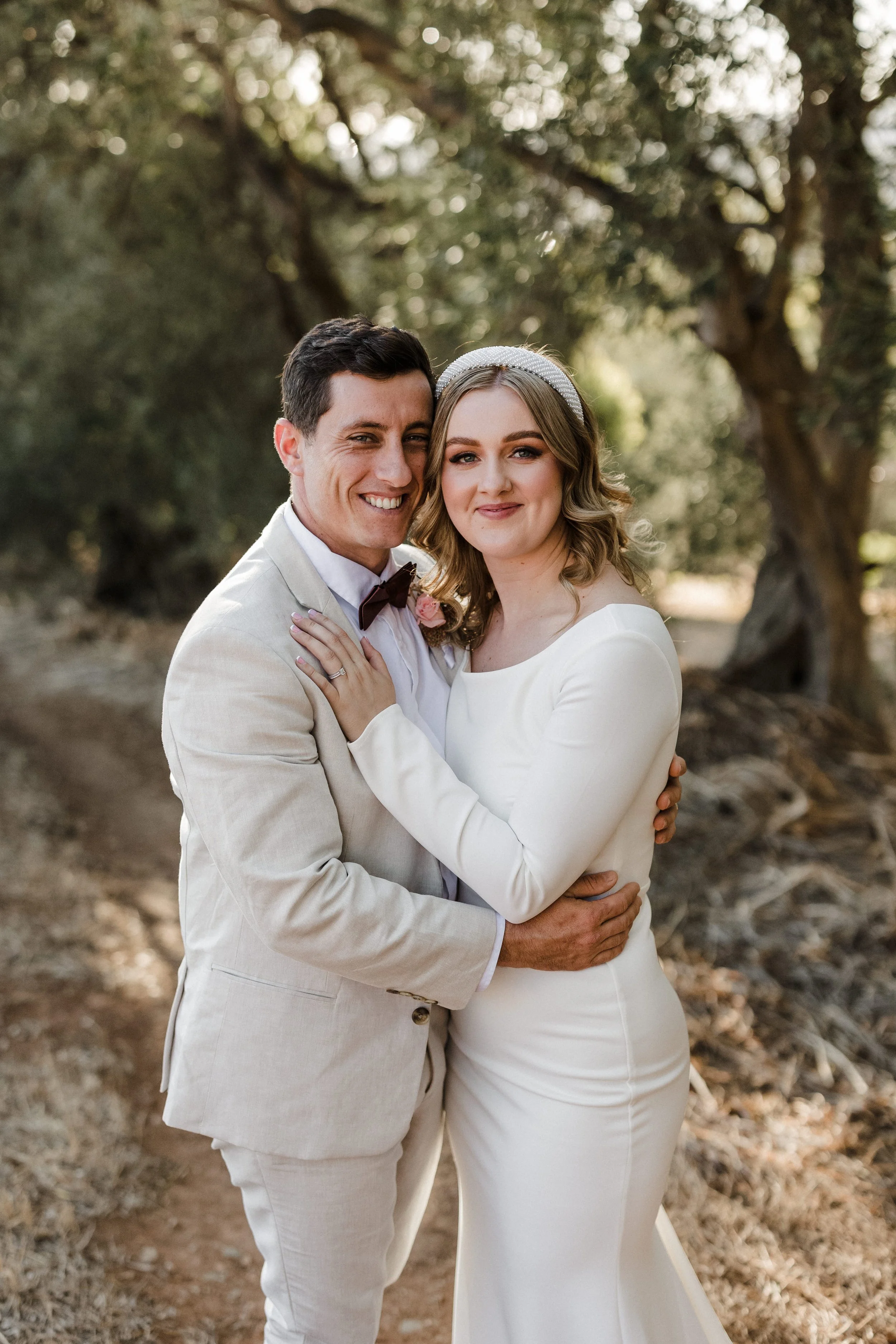
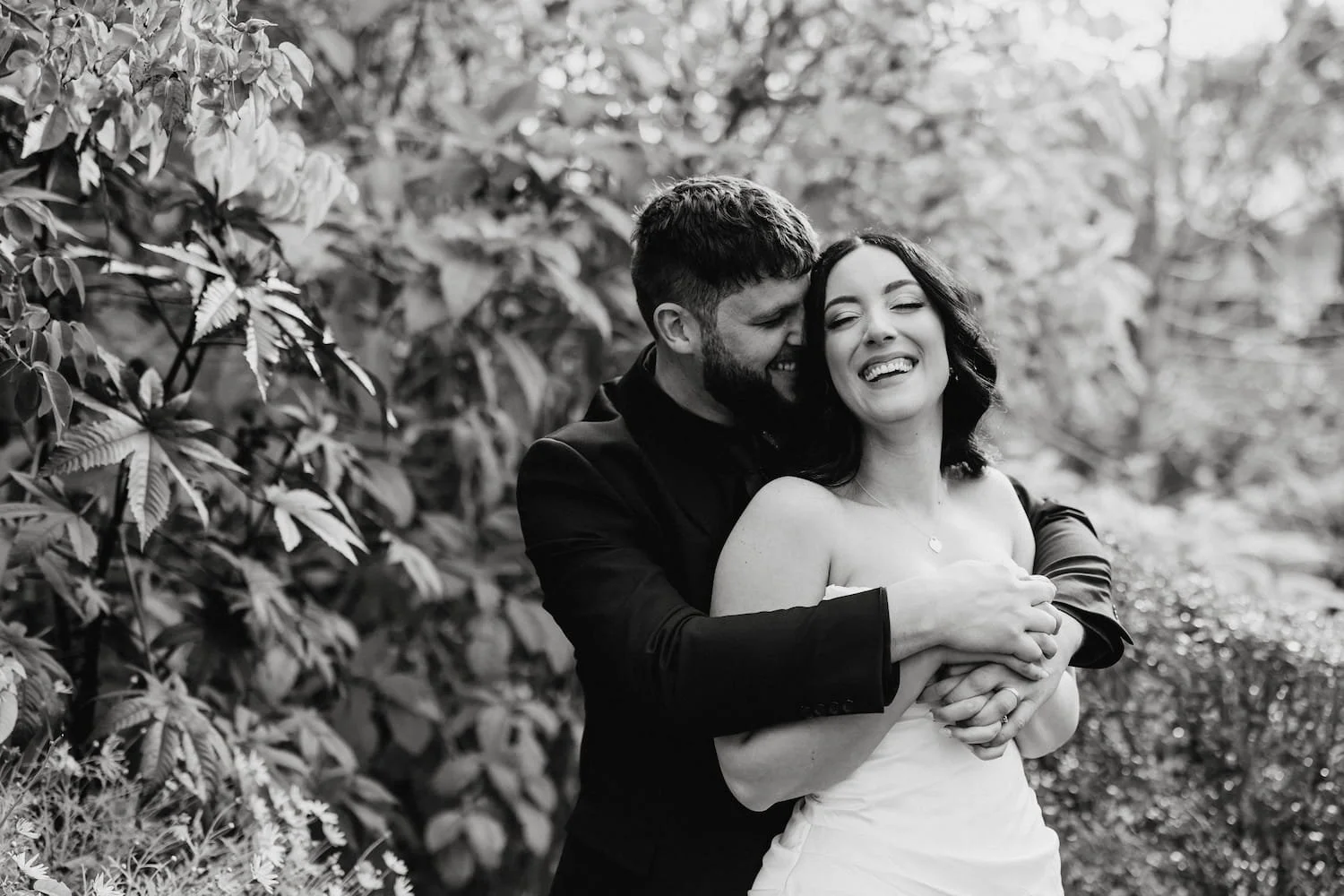
Open shade is one of my favourite options when the sun is high or particularly strong. It simply means finding an area of soft, even shade—perhaps beside a building, beneath a verandah or under a large tree.
Although people sometimes worry that shade will make their photographs look dark or flat, it can create beautifully soft and flattering light when used well. Where possible, I’ll position you near the edge of the shade, with a little sunlight filtering through behind you. This keeps the light across your faces gentle and even, while adding warmth, depth and a soft glow to the background.
It’s especially useful around the middle of the day, when direct sunlight can otherwise create harsh highlights and deep shadows across faces.
Dappled Shade + Directional Backlight
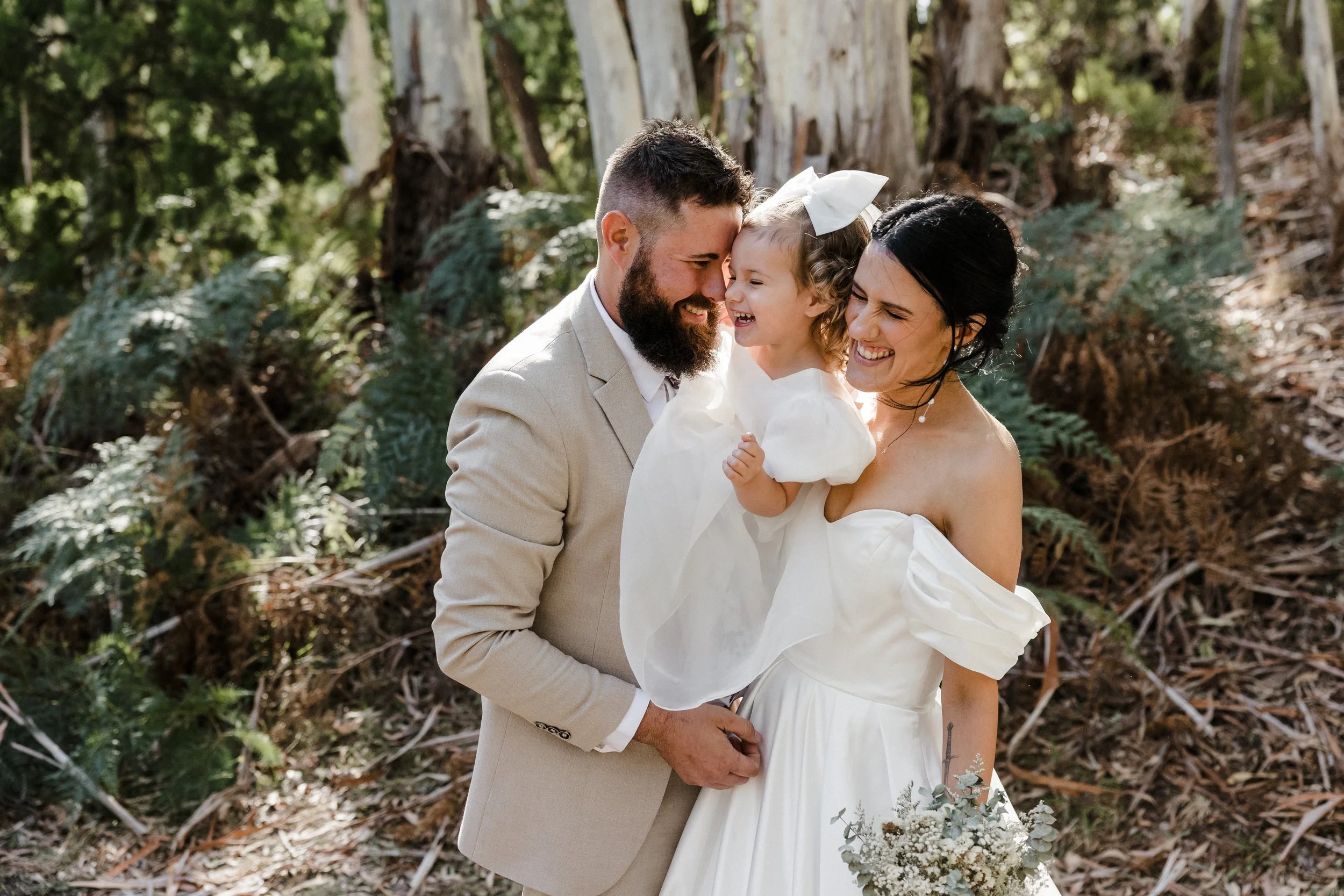
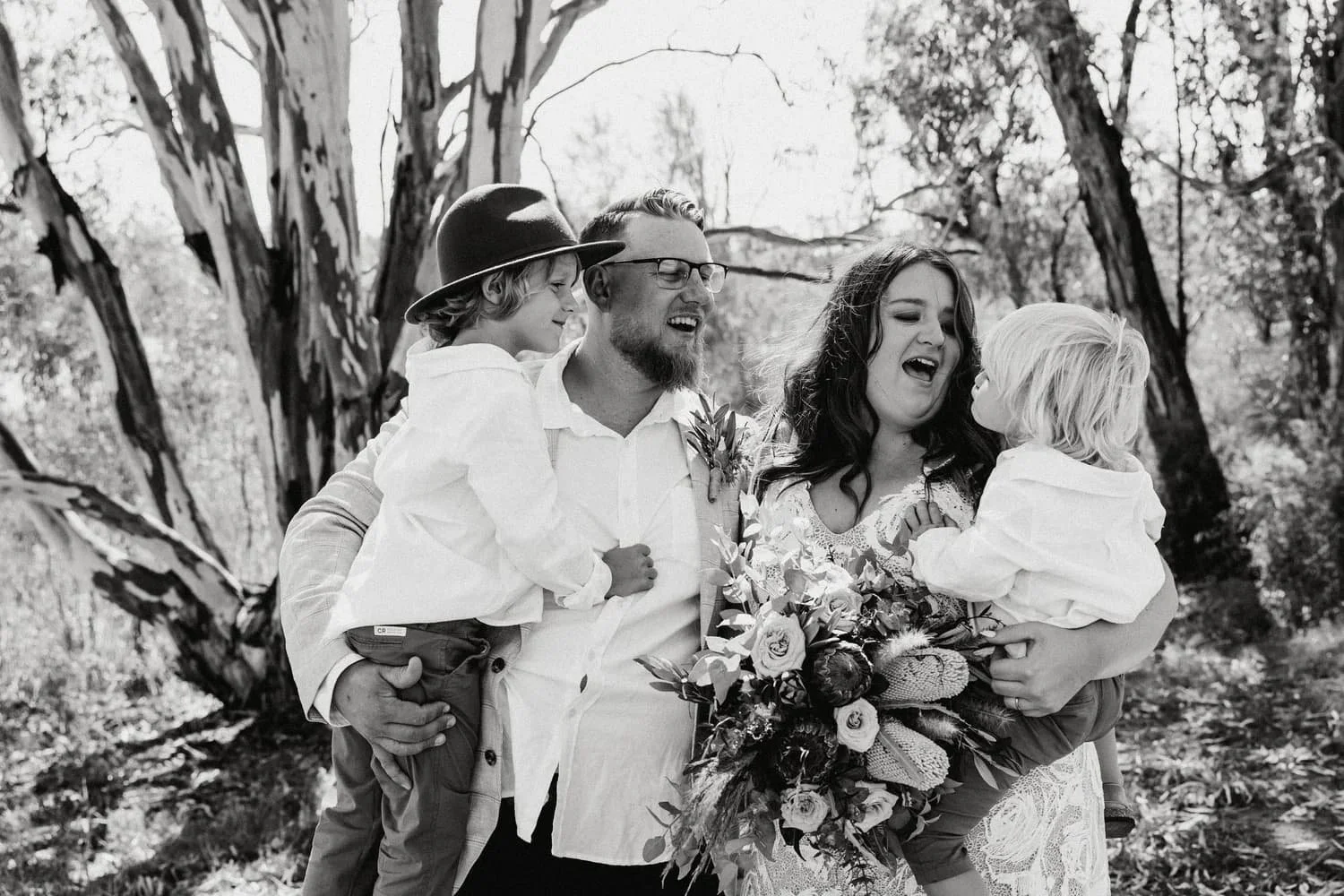
Sometimes beautifully even shade simply isn’t available—especially in bushland, vineyards or beneath trees where sunlight filters through in patches. In those situations, I’ll usually keep the strongest light behind you or slightly to one side, rather than falling directly across your faces.
This keeps the light softer and more flattering where it matters most, while still allowing little pockets of sunlight to create warmth, movement and depth through the background. Dappled light can be unpredictable, but when it’s positioned carefully, it can feel wonderfully natural and full of life.

Overcast Skies
Cloudy wedding days tend to divide opinion. Some couples absolutely love the soft, moody atmosphere they create, while others have been dreaming of golden sunshine for years.
From a photography perspective, overcast skies act like one giant diffuser, softening the sunlight before it reaches the ground. It's a little like having open shade almost everywhere, creating gentle, flattering light that's wonderfully consistent throughout the day.
Every overcast day is different too. Thin cloud can still give us direction and warmth, while heavier cloud creates softer, moodier photographs.
Personally, I still get excited when the sun peeks through for a little backlight or a glowing sunset. But some of my favourite wedding photographs have also been made beneath a blanket of cloud. Beautiful light isn't about chasing perfect weather; it's about making the most of whatever the day brings.
Mid to Late Afternoon (Or Early to Mid Morning) - Outside
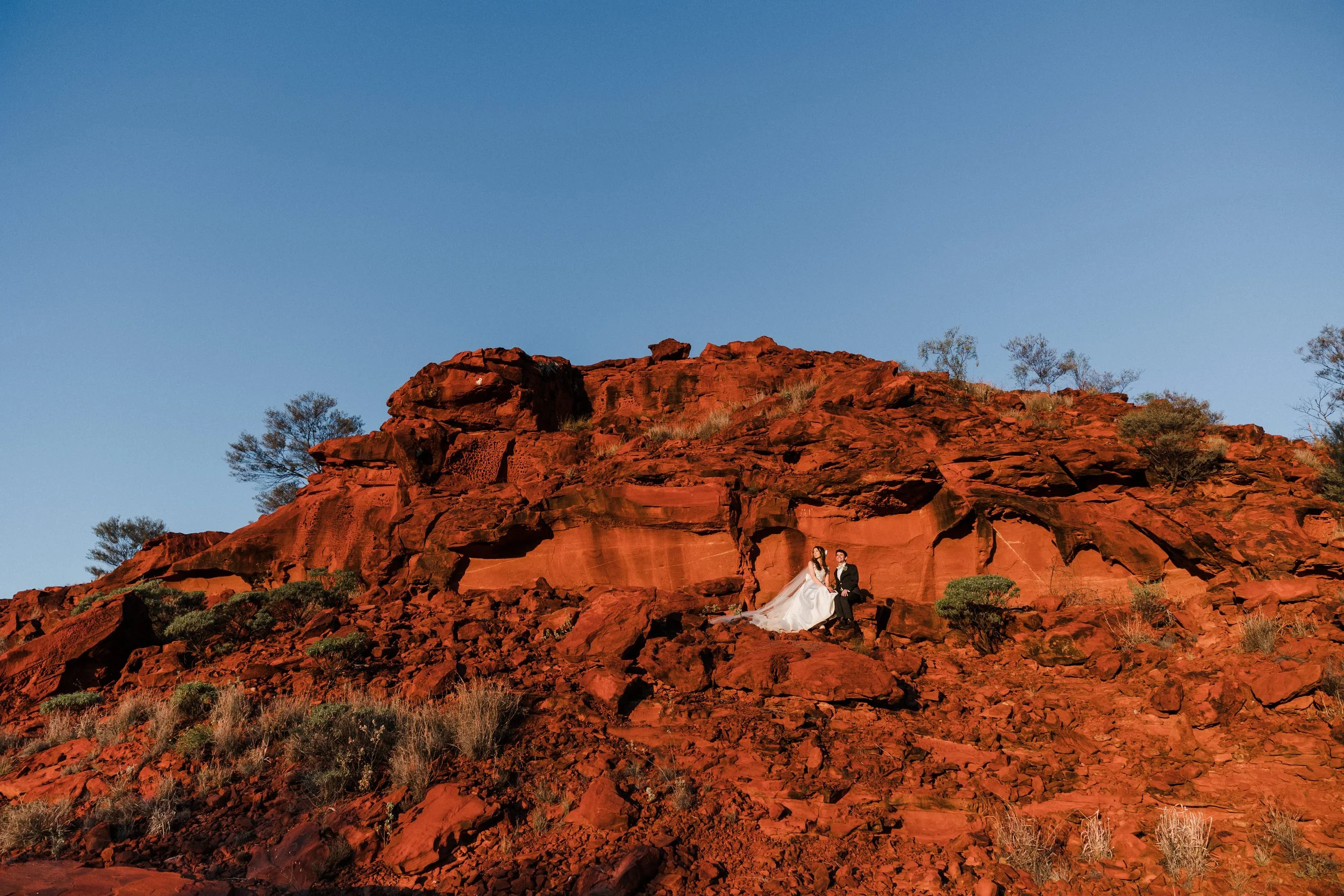
Golden hour gets a lot of attention, but the light in the hours before it can be just as much fun.
As the sun begins moving lower in the sky, it casts longer shadows while still retaining plenty of brightness and contrast. Those shadows can become a beautiful compositional element, leading the eye through the photograph and adding drama and shape.
Backlighting or side-lighting at this time can create a gorgeous glow while still giving the images plenty of colour and energy. And if your eyes can cope, or we create something a little more candid/cinematic with you looking off camera, direct light can really make colours pop. This type of light is particularly lovely for wider landscape photographs, playful movement and brighter portraits.
Golden hour + Sunset portraits
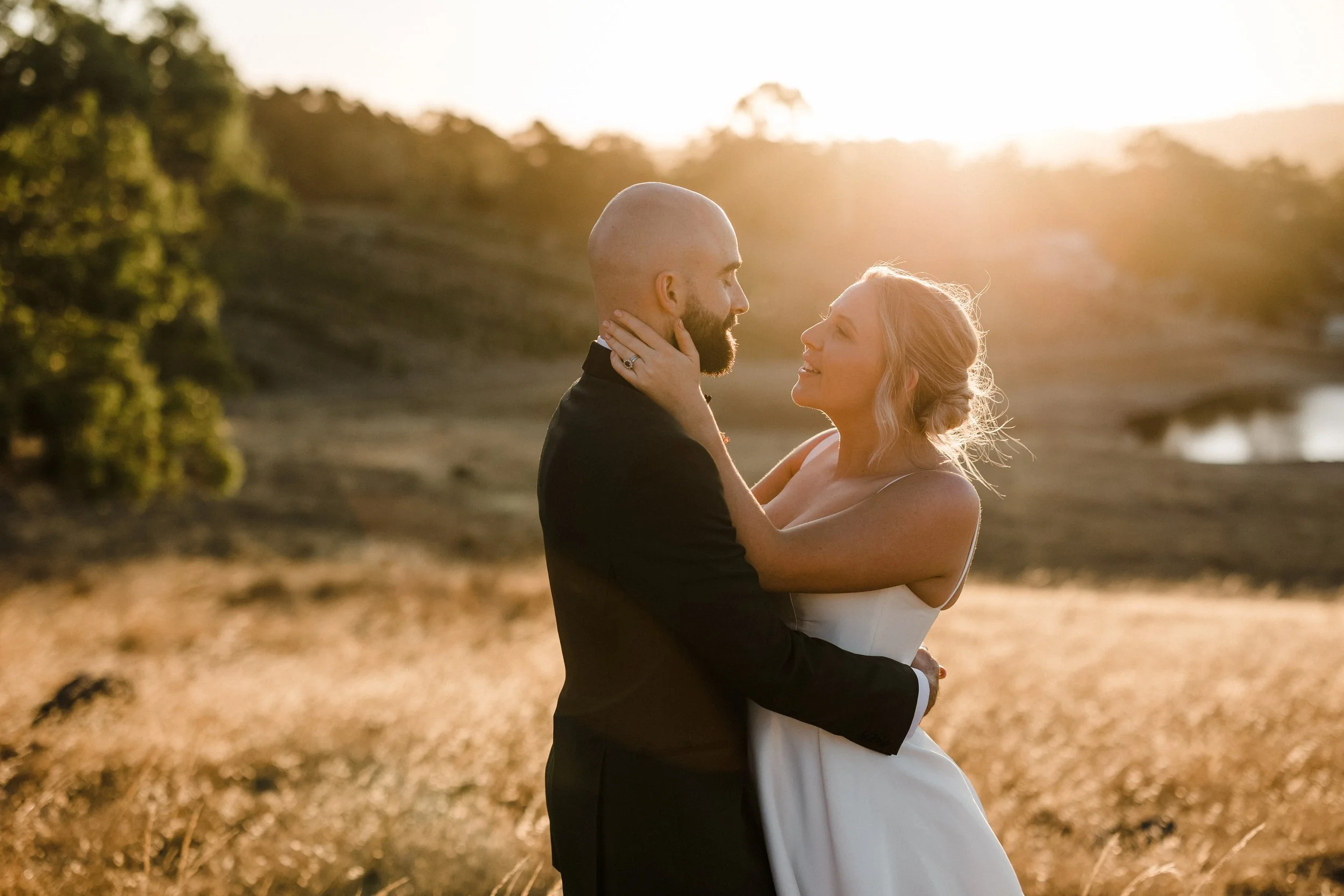
When couples talk about sunset portraits, they’re often imagining the whole beautiful stretch of light around sunset—from the warm glow of golden hour to the softer colours that appear as the sun slips below the horizon.
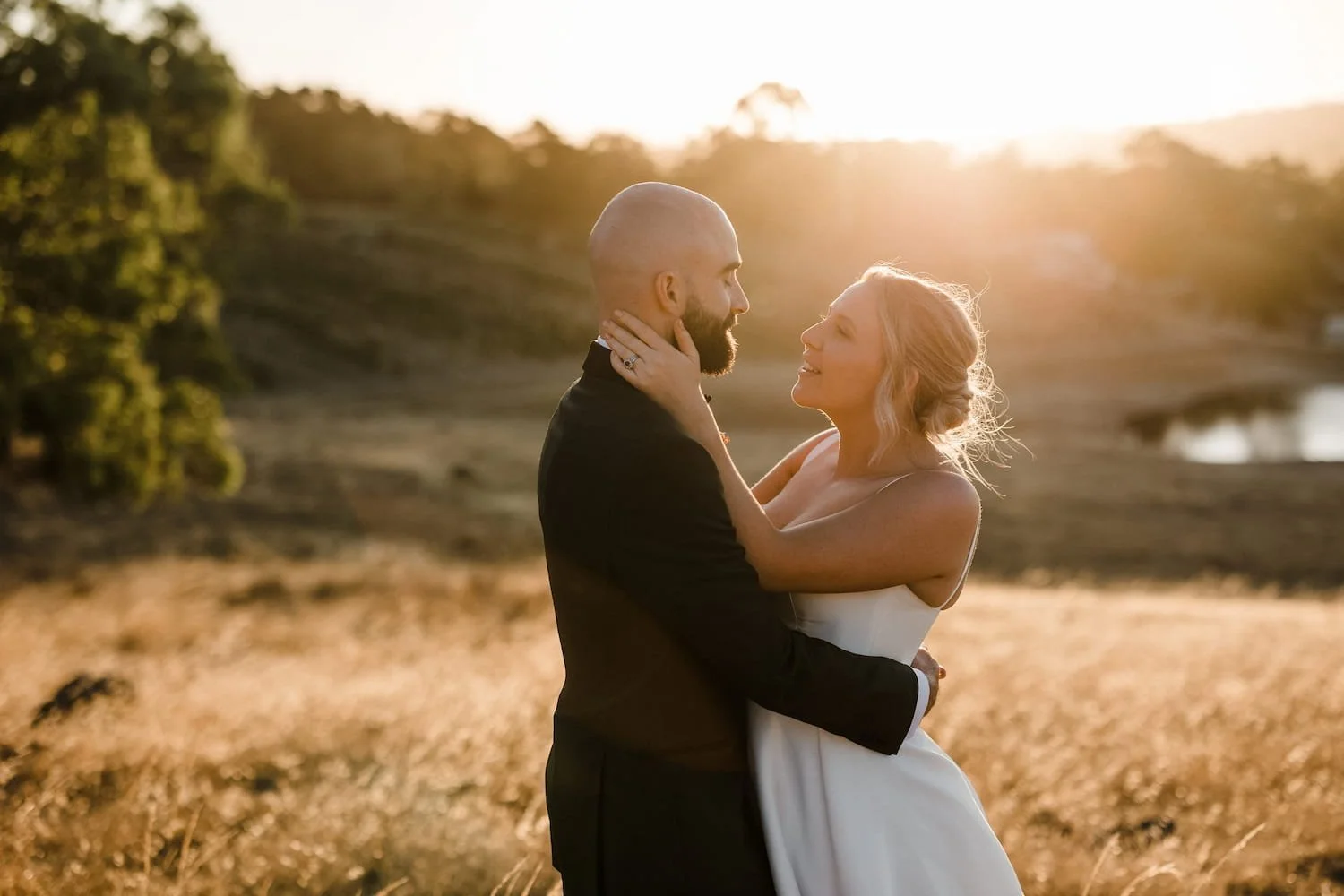
Golden hour happens shortly before sunset, when the sun sits low in the sky and casts warm, glowing light across the landscape. We can create dreamy backlit photographs, warm side-lit portraits, long shadows and wide images filled with glowing scenery.
As the sun begins to disappear, the light becomes softer and more even. If the clouds cooperate, the sky may turn pink, peach, orange, violet or blue, giving us a lovely opportunity for silhouettes and photographs where the landscape and sky become part of the story.
You don’t need to disappear from your reception for an hour. Even 15–20 minutes outside together can be enough to create something beautiful—and give you a quiet moment to breathe and take in the day.
Blue Hour
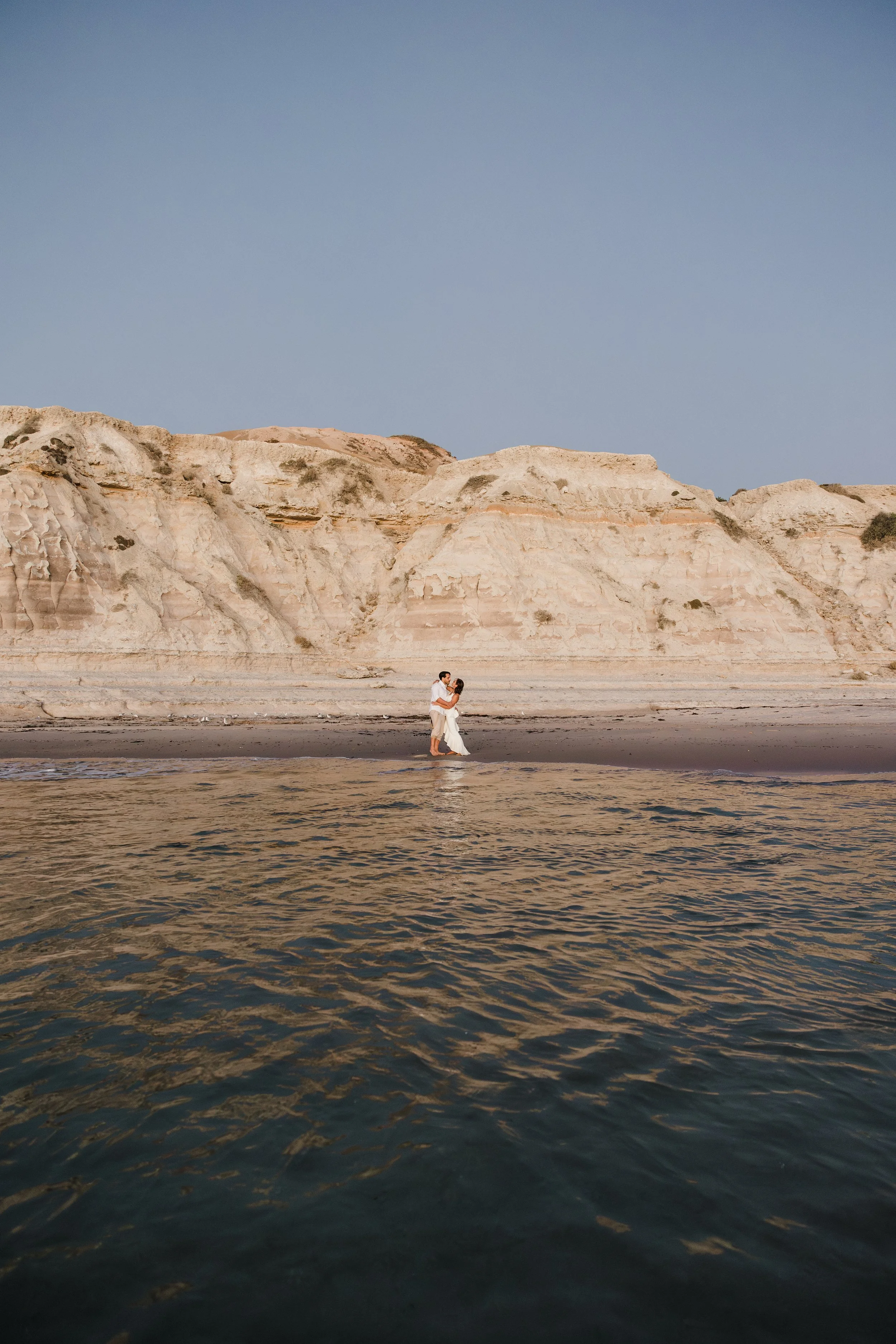
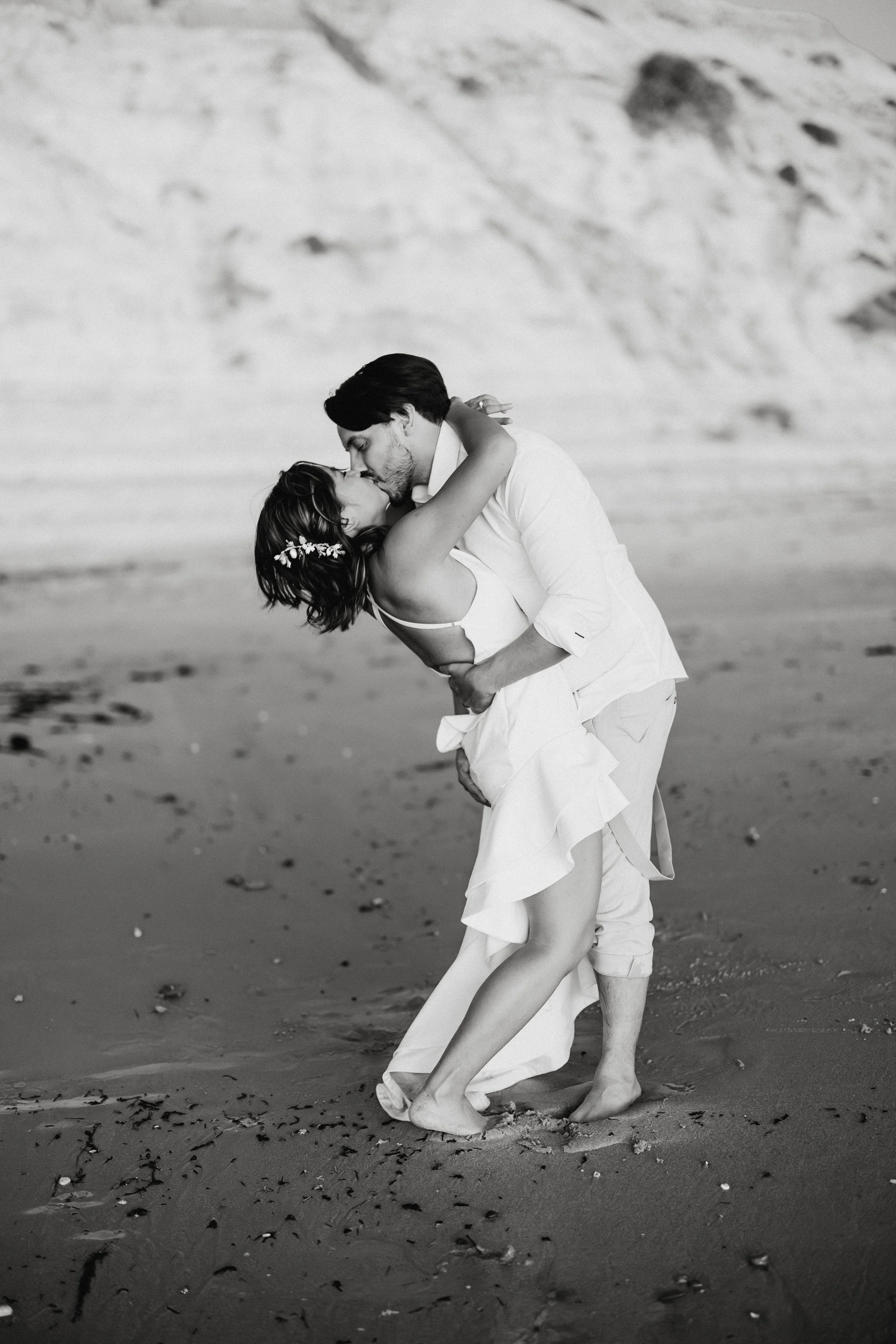
Blue hour begins shortly after sunset, when the sun has dipped below the horizon but there’s still a little ambient light left in the sky.
This light has a cooler, deeper tone than golden hour and can feel dreamy, dramatic or even a little cinematic. It’s also a really fun time to experiment with slow shutter speeds, movement and the very last dregs of daylight.
You might see a deep blue sky, glowing venue lights, blurred movement or a couple standing still while the world moves around them. It isn’t the right look for every wedding, but for couples who love something creative, atmospheric or a little unusual, blue hour can be magic.
Twilight/Night
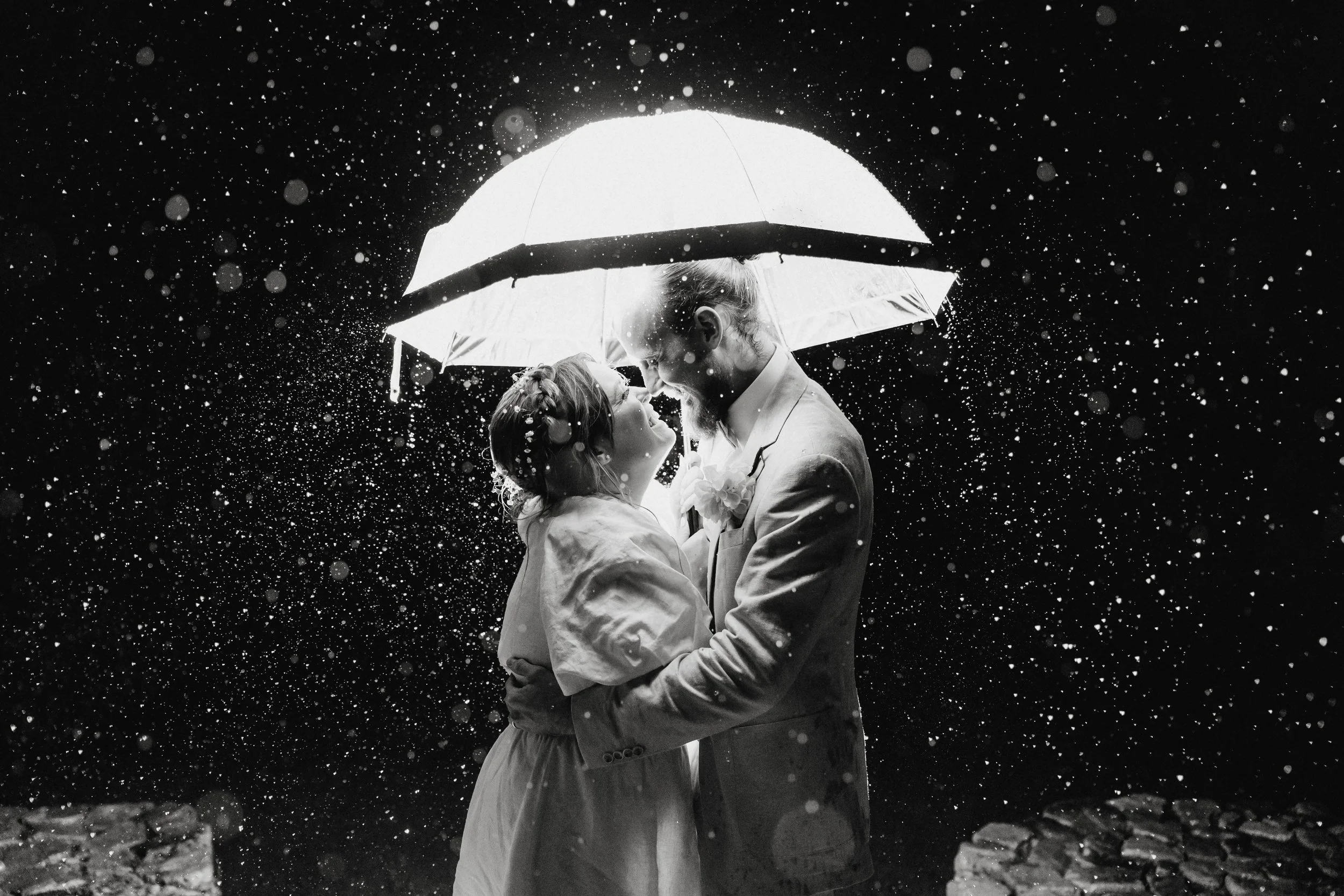
Once the natural light has faded, we can start playing with all the little pools of light around us.
Streetlights, headlights, neon signs, candles, fairy lights and venue lighting can all add colour and character to your photographs. Flash can also be used creatively—not just to make a dark space brighter, but to freeze movement, create dramatic shadows or capture the energy of the dance floor.
Night photography can be unpredictable and a little weird in the best possible way. It gives us a chance to create images with bold colours, deep shadows, movement and dramatic highlights that feel completely different from the softer photographs taken earlier in the day. And if it’s raining at night? Absolutely glorious!
Party Lights
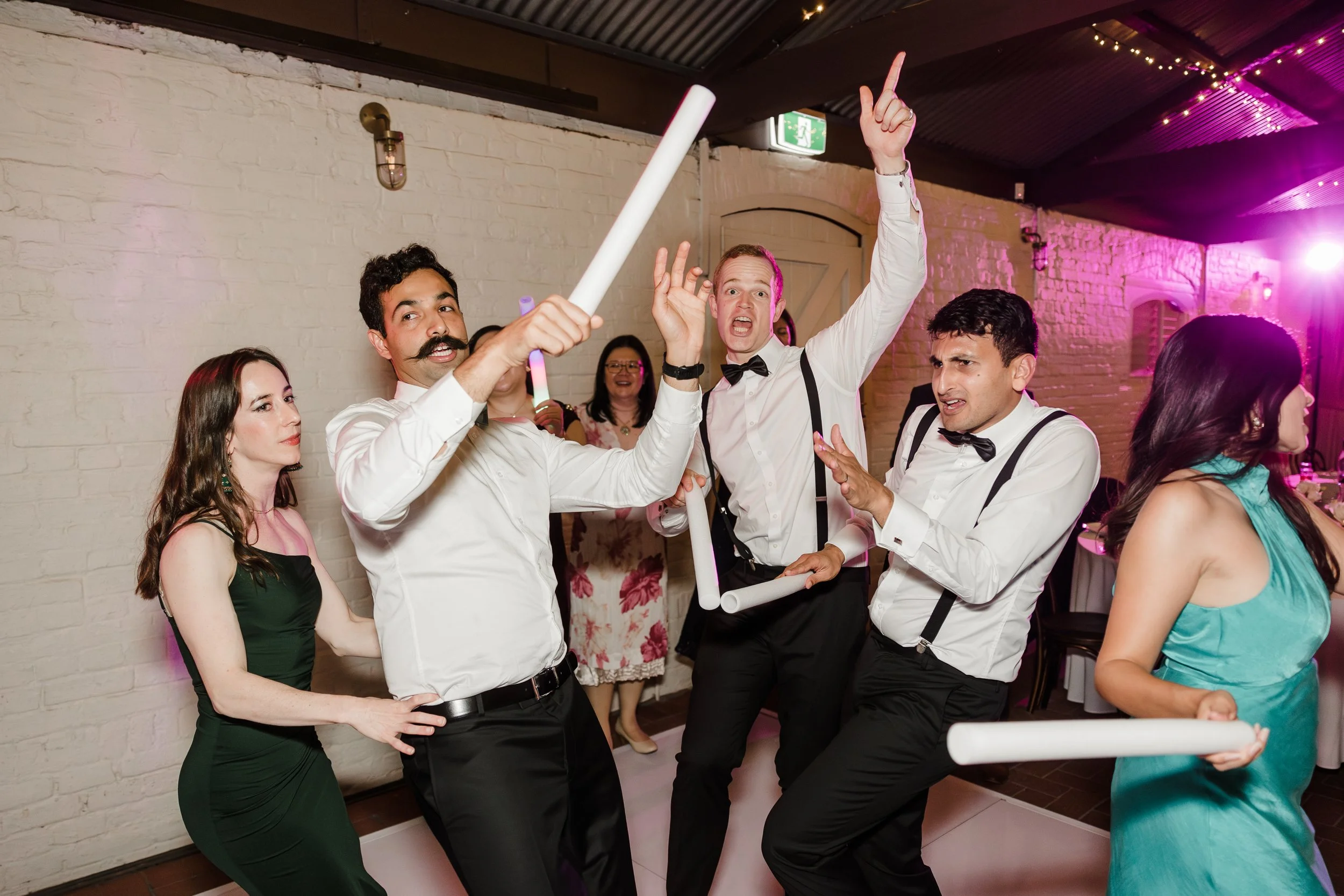
Direct Flash (with softbox)
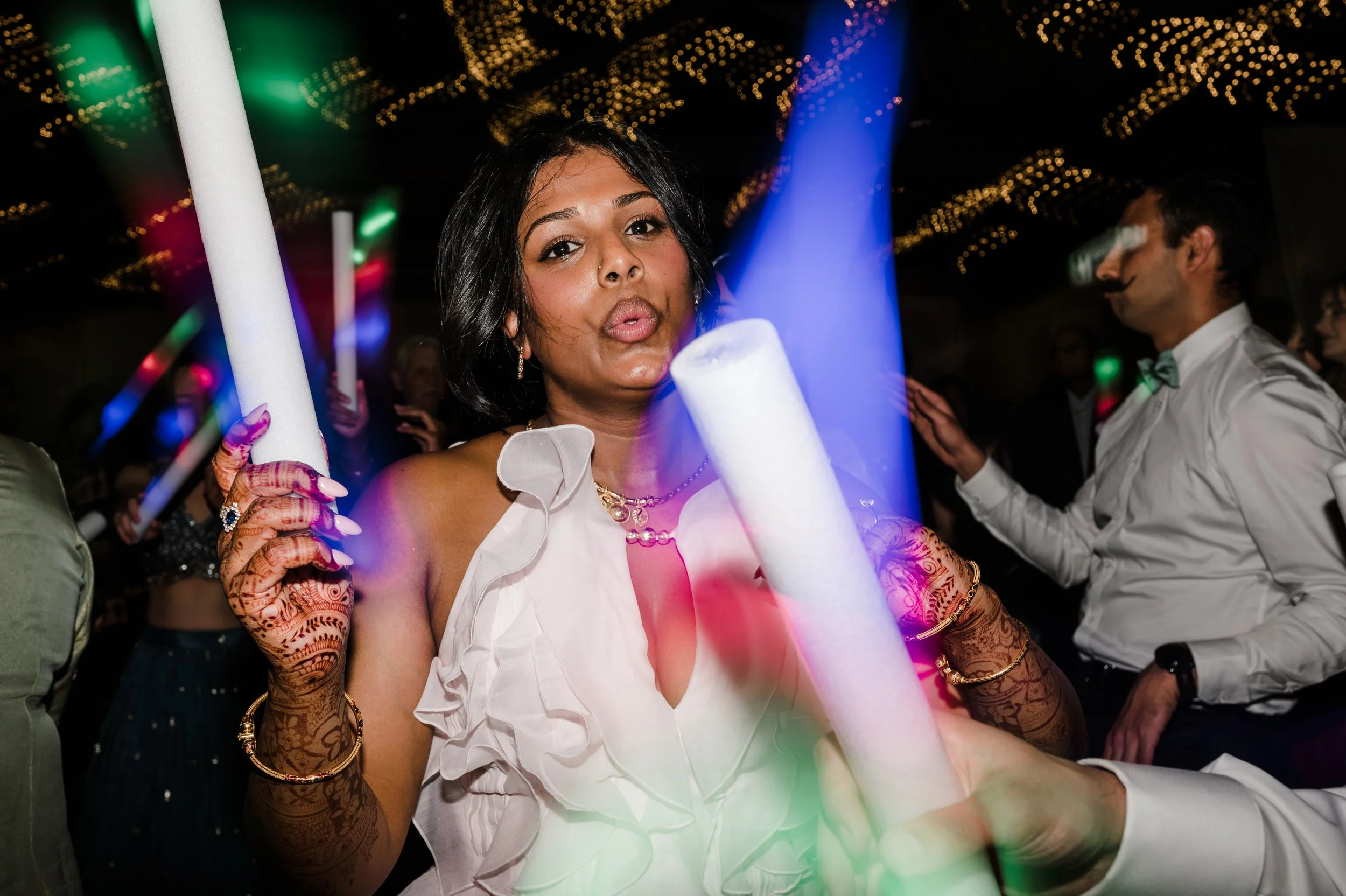
Flash + Shutter Drag
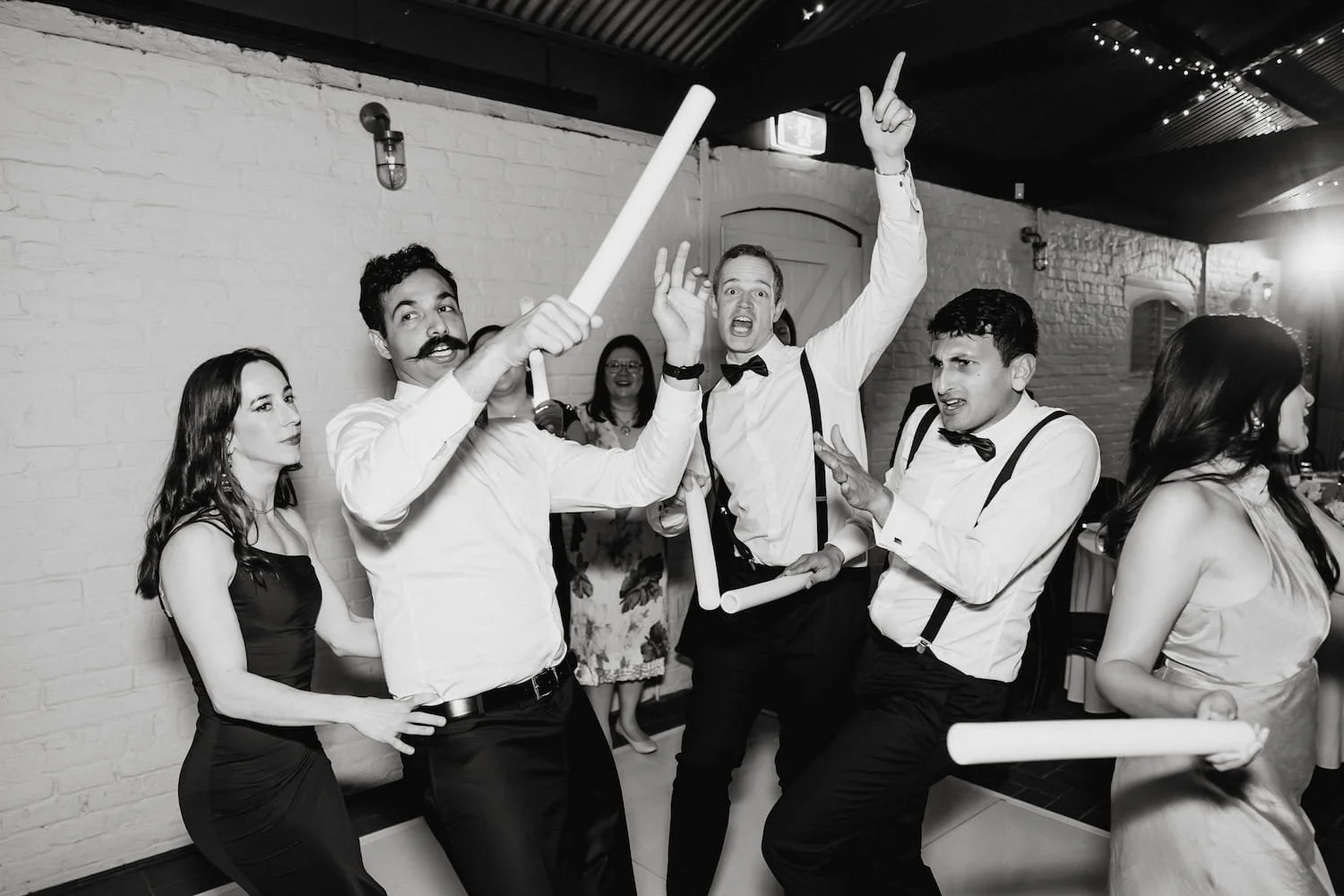
Once the sun is gone and the dance floor opens, I switch gears a little. Rather than trying to make the room look like daylight, I like to embrace the atmosphere you've spent months planning. Warm fairy lights, candles, festoon lights, coloured DJ lighting and all the energy of the dance floor become part of the story.
For much of the evening, I use an on-camera flash with a small softbox attached. This gives me soft, flattering light while still preserving plenty of the atmosphere around you. The result feels nostalgic and full of life, rather than harsh or overly "flashy."
If time allows on the dance floor, I love getting a little creative. By dragging the shutter, I can combine a sharp flash-lit moment with the movement of the lights and dancing around you. The result captures not just what the party looked like—but what it felt like to be there.
How to Use This Light on Your Wedding Day
So, how can you make the most of all these different kinds of light?
Where possible, I like to visit wedding venues beforehand—ideally around the same time your ceremony or portraits will take place. This helps me understand where the sun will be, which areas will be in shade, and which locations are likely to look best at different times of day.
I’m a bit of a light geek, so I’ll often bring a sun compass too. Even if the day is overcast or we visit at a different time, I can still predict where the sun is likely to sit on your wedding date.
You can also ask your photographer to help plan your timeline around the light. That doesn’t mean your entire wedding needs to revolve around photographs. It simply means being thoughtful about when certain parts of the day happen, and perhaps setting aside a few minutes around golden hour or sunset if those glowing portraits are important to you.
The best light isn't always the "perfect" light. Every wedding day brings something different—bright sunshine, heavy cloud, glowing sunsets or a wild dance floor lit by fairy lights. My job isn't to wait for perfect conditions; it's to understand the light we're given and use it to tell your story beautifully. The season, location and weather will always have an influence, but beautiful photographs can be created in almost any kind of light. 15 years of experience allows me to notice what the day gives us and make the most of it.
Please feel free to get in touch if you’d like help planning your wedding timeline around the light. x



Not sure which wedding photography style feels right for you? This guide explores classic, editorial, documentary, natural and cinematic photography—helping you understand how each approach feels on the day, how much direction you might receive, and which one will make you think, “Yes. That’s what I want.”