
How to Plan a Relaxed Wedding Day Timeline (and Actually Enjoy It)
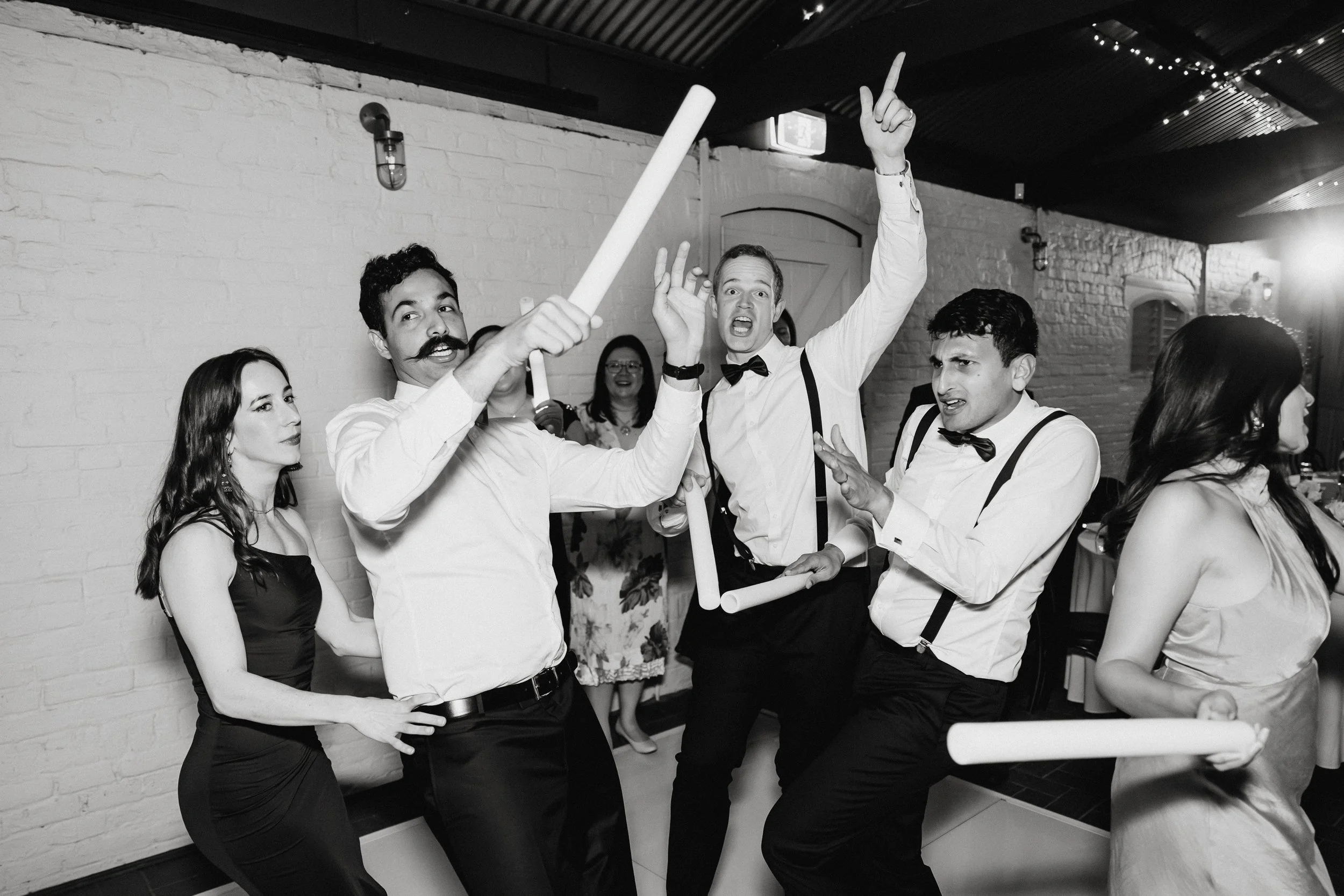
(Originally published: January 2014. Updated: August 2026)
There is no single right way to schedule a wedding.
You don’t need preparation photos, a first look, a wedding party, a cake, speeches or a first dance just because they appear on somebody else’s run sheet. Traditions are a menu, not a checklist. Keep the ones that mean something to you, change the ones that don’t quite fit, and happily skip the rest.
After 15 years of photographing weddings, my biggest piece of timeline advice is very simple: plan a day that you get to enjoy.
Your timeline should take pressure off. It should help your suppliers work together, give the important moments room to unfold and make sure you actually get to enjoy the people, food and celebration you’ve put so much love into planning.
Start with what matters to you
Before you start assigning times to everything, think about how you want the day to feel.
Who do you really want time with?
Which traditions feel meaningful to you?
Do you want a huge party, a long relaxed meal, plenty of time outside with your guests, or a quiet moment together before everything begins?
Are sunset portraits important to you—or would you rather stay on the dance floor?
Do you want to spend the morning getting ready with your favourite people, or skip preparation photos completely?
If a first dance makes you excited, make room for it. If it fills you with dread, don’t have one. If sharing canapés with your guests matters more than an hour-long portrait session, that should shape the timeline too.
Once you know what your non-negotiables are, you can build the day around them—and stop trying to squeeze in things neither of you particularly wants.
Build around a few anchors—not every minute
Start with the parts of the day that have a fixed or less-flexible time: your ceremony, meal service, venue access or curfew, travel between locations and sunset if you’d love photographs in that light.
Then add the other parts around those anchors, with some space between them. Your timeline doesn’t need to account for every hug or every glass of champagne. It just needs to give the day enough shape that everyone knows what’s happening next.
Once it’s ready, share the same final timeline with your venue, celebrant, photographer, videographer, content creator, DJ and MC. Small differences between six versions of a run sheet can cause surprisingly large wobbles on the day.
Give everything breathing room
Wedding days have a habit of wobbling. Getting ready runs a little over. Someone can’t find a buttonhole (or grandpa). The trip that looked like ten minutes on Google Maps takes twenty once everyone has found their bag, piled into the cars, parked and walked inside. A speech that was definitely going to be three minutes becomes twelve.
And the congratulations after your ceremony? Those hugs don’t run to a schedule—and you don’t want them to.
Breathing room means one small delay doesn’t create a domino effect across the entire day. It also isn’t wasted time. It becomes a chance to eat something, talk to that close friend your haven’t seen in ages, have a drink or simply stand still together and take it all in.
A few easy places to create it:
Aim to be completely ready a little before you need to leave, rather than scheduling the final touches right up until departure.
Allow for parking, gathering people and walking between locations—not only the driving time.
Remember that your ceremony finish time may not include signing, confetti and all those beautiful post-ceremony hugs.
Avoid stacking every formality back-to-back. A little conversation and movement between them helps the whole celebration feel more natural.
The goal isn’t to make sure everything happens at the exact minute written down. It’s to create a timeline that still feels relaxed when it doesn’t run exactly to plan.
Break the photography into smaller pockets
One of the easiest ways to protect your time with your guests is to stop treating photography as one enormous block between the ceremony and reception.
I love breaking photos into smaller pockets at times that already make sense. Your guests barely notice you’ve gone, you don’t miss the whole canapé hour, and no part of the day starts to feel like one very long photoshoot.
Take the group and family photos straight after the ceremony
Directly after the ceremony—once you’ve had time for those first hugs—is usually the easiest time to take a whole-group photograph and your planned family photos. Everyone is already together, dressed beautifully and, with any luck, still nearby.
Ask your celebrant to let guests know if there will be a whole-group photo, and to remind anyone needed for family/group photos to stay close. I’ll generally start with the largest group, then let everyone who isn’t needed head towards the drinks and canapés while we work through the smaller combinations.
A short, thoughtful family list will help this part run smoothly without letting it take over. I have a whole guide to planning your wedding family photos here.
Then go and enjoy your own canapés
Canapé hour doesn’t need to be the hour when you disappear from your wedding.
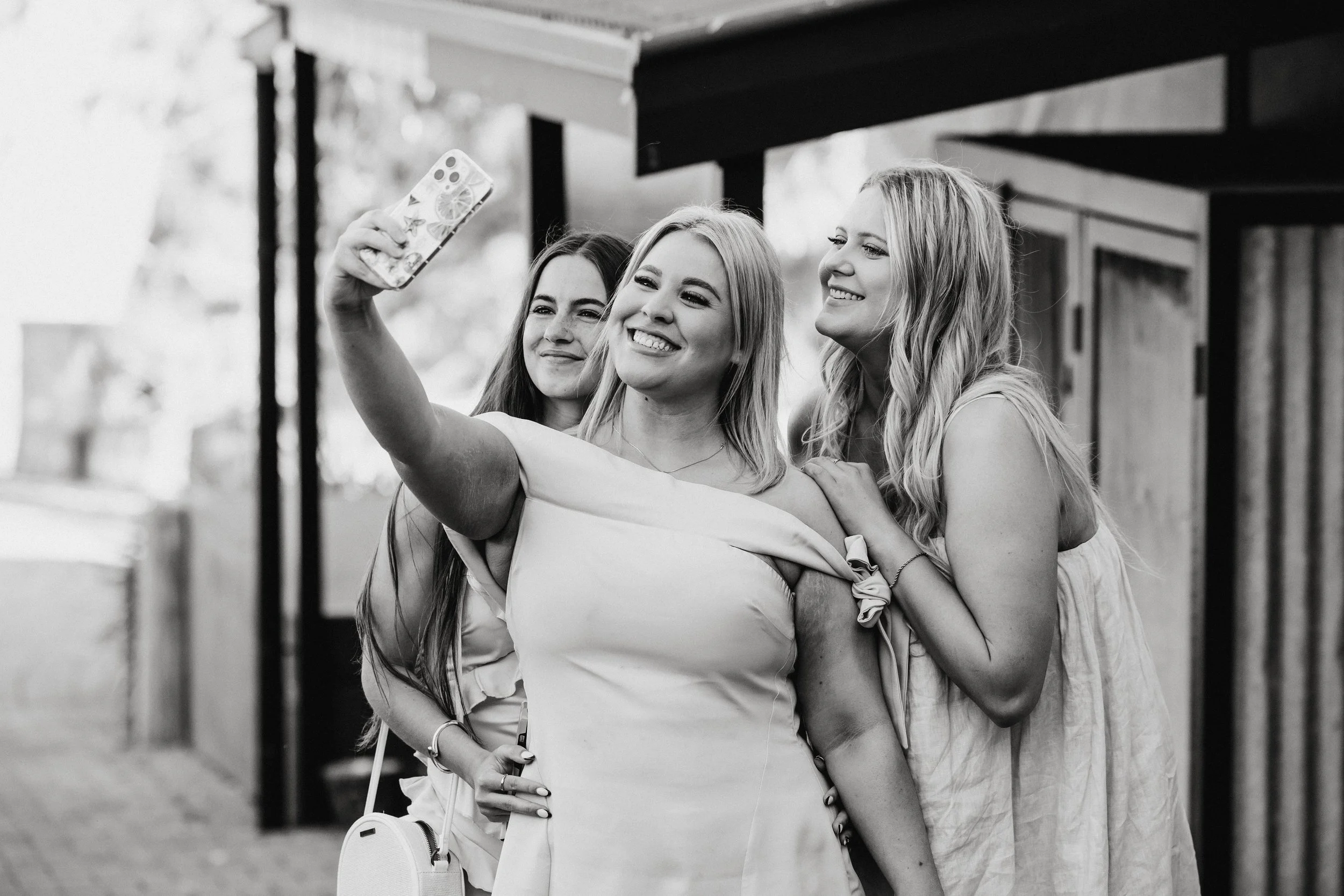
Once the family photos are done, go and be part of it. Have a drink. Eat the food you carefully chose. Hug the people who travelled to celebrate with you. Let me photograph the little reunions, ridiculous guest moments and all the beautifully unscripted things happening around you.
If you’re having a wedding party, those portraits can happen before the ceremony, in one short pocket after the family photos, or a little later—whatever protects the parts of the day that matter most to you.
Choose a couple-portrait time that fits your day
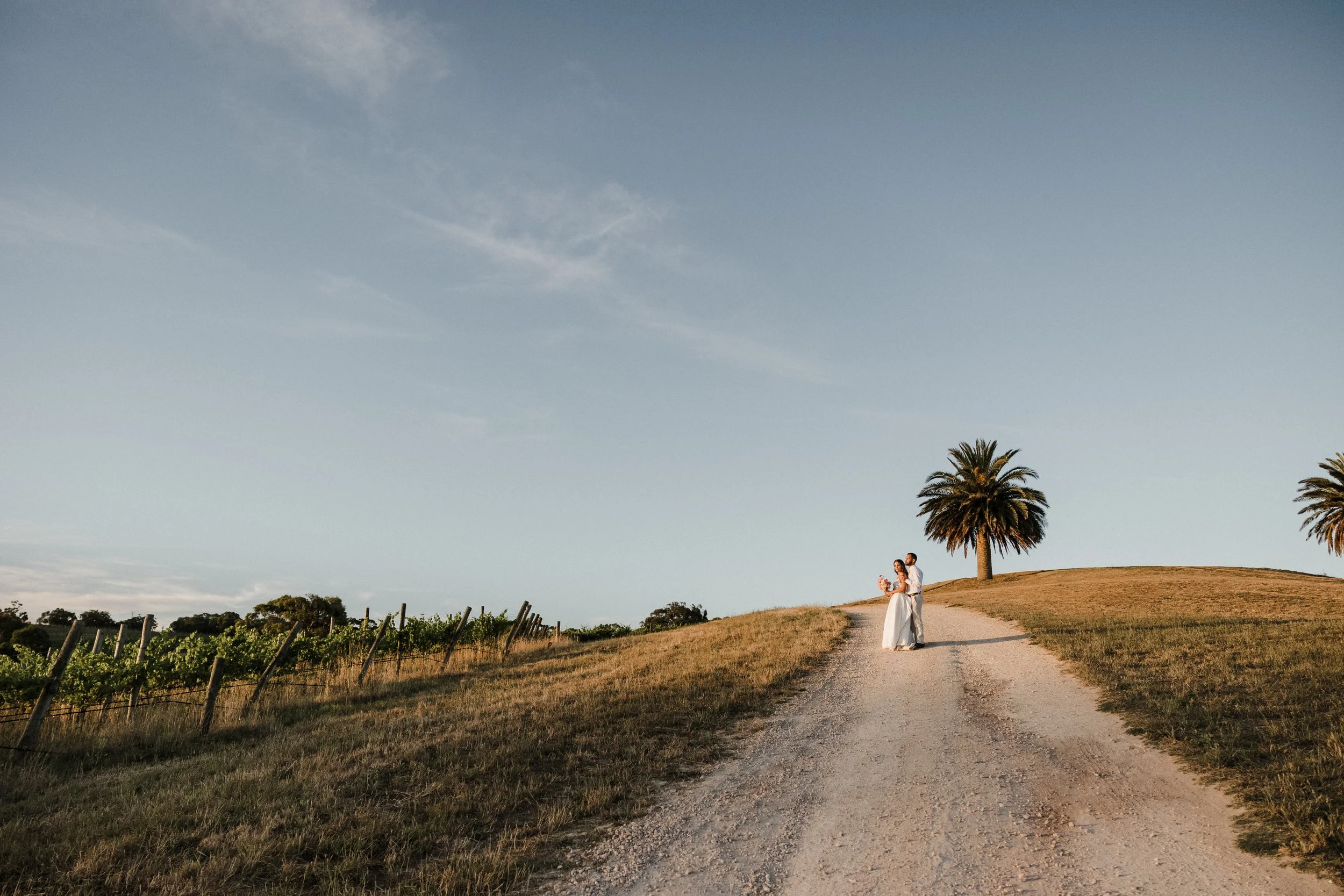
There are three particularly lovely times to take couple portraits, and there is no rule saying that you must choose only one.
Before the ceremony: If you’re happy to see each other beforehand, this can give you a quiet moment together while your hair, make-up and outfits are still completely schmick. You might have a private first look, get ready together, or simply meet for portraits before the guests arrive. Once the ceremony is over, you can head almost straight into the celebration.
While guests move into the reception: When everyone is finishing their drinks, finding their seats and settling inside, we can sneak away for a short portrait wander. They’ll barely notice you’ve gone—and you can make your entrance a little later with everyone settled to welcome you.
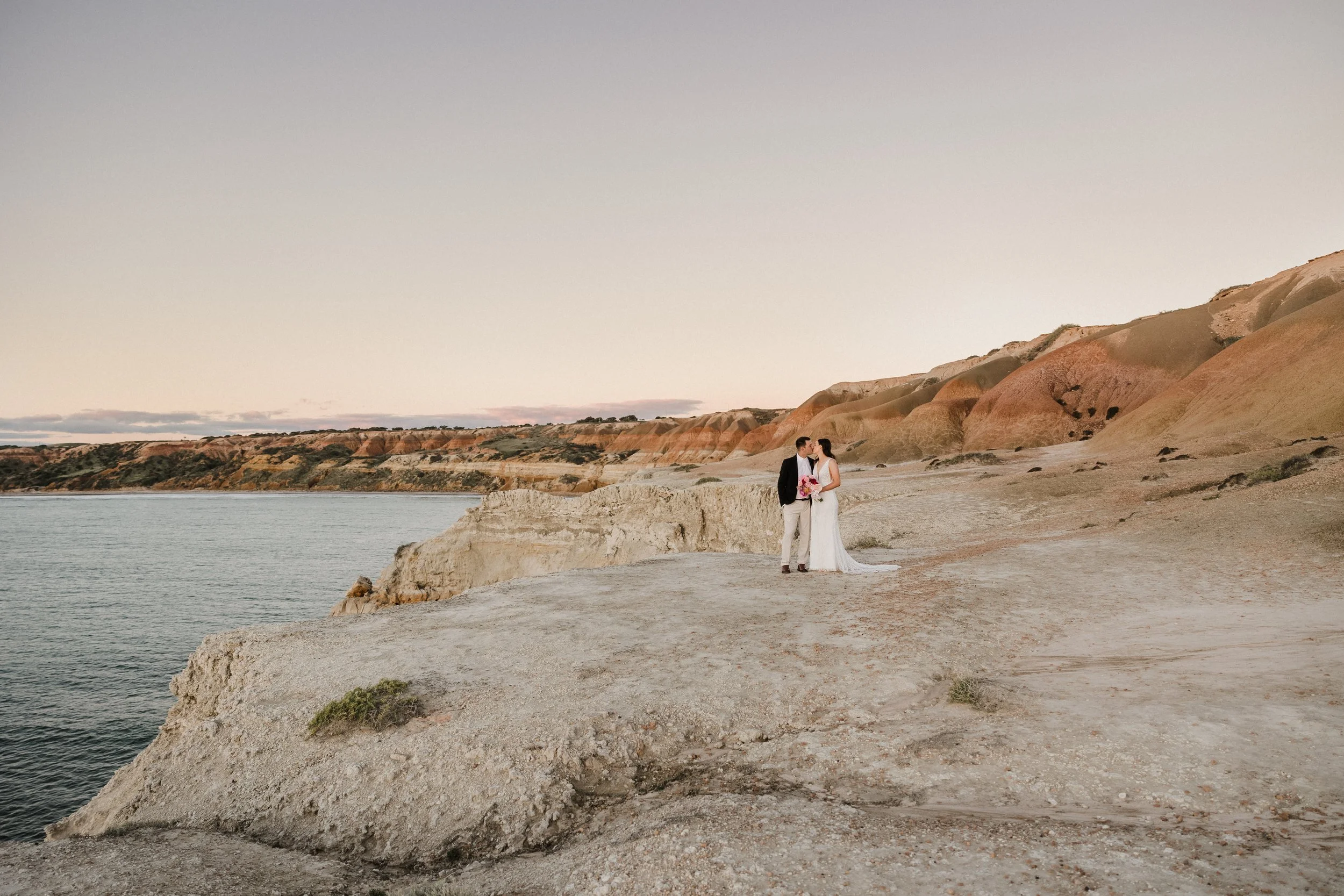
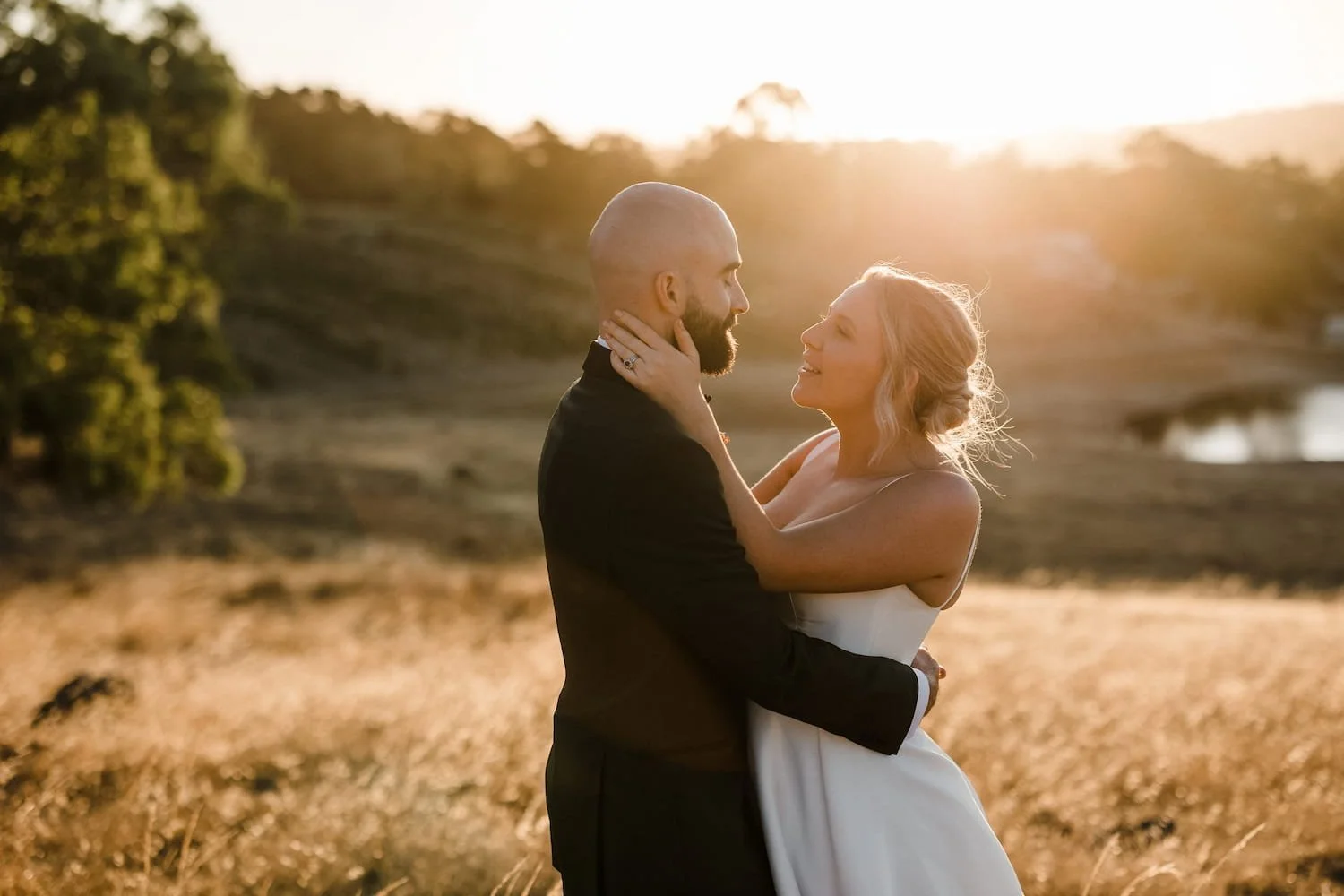
Around sunset: Ten or twenty minutes in beautiful light can be plenty. It gives you a breather, a chance to reconnect and some killer portraits before we send you straight back to the party. Sunset changes enormously across the South Australian seasons, so ask your photographer where it fits best on your date. You can also read more about the different kinds of light I love using throughout a wedding day.
Bonus thought: I’ve even captured weddings where we shot the couple portraits on an entirely different day. Or, if the reception is planned for lunch, after the celebration has finished (usually right as the light is getting good for sunset).
You might take most of your portraits before the ceremony and pop out again for a few minutes when the sky does something incredible. Or enjoy canapé hour and take all your portraits while guests move into the reception. The best choice is the one that works for your wedding—not the one tradition tells you to make.
Help the reception build momentum
A good reception schedule leaves room to eat and talk, while gently carrying everyone towards the party. A few small timing decisions can make a surprisingly big difference.
Ask for your suppliers to be fed when you eat
If your photographer, videographer, content creator, DJ or professional MC is being fed, ask your venue to serve their meals at the same time as yours—not once every single guest has been served.
This isn’t because your suppliers are more special than your guests. It’s because the one time we’re least likely to miss an important moment is while you’re eating too. If our meals arrive just as the speeches or first dance begin, we either don’t eat or risk missing something you’ve asked us to capture. Neither is much fun.
Let your venue know this early, and include the supplier meal timing on the final run sheet.
Split up the speeches
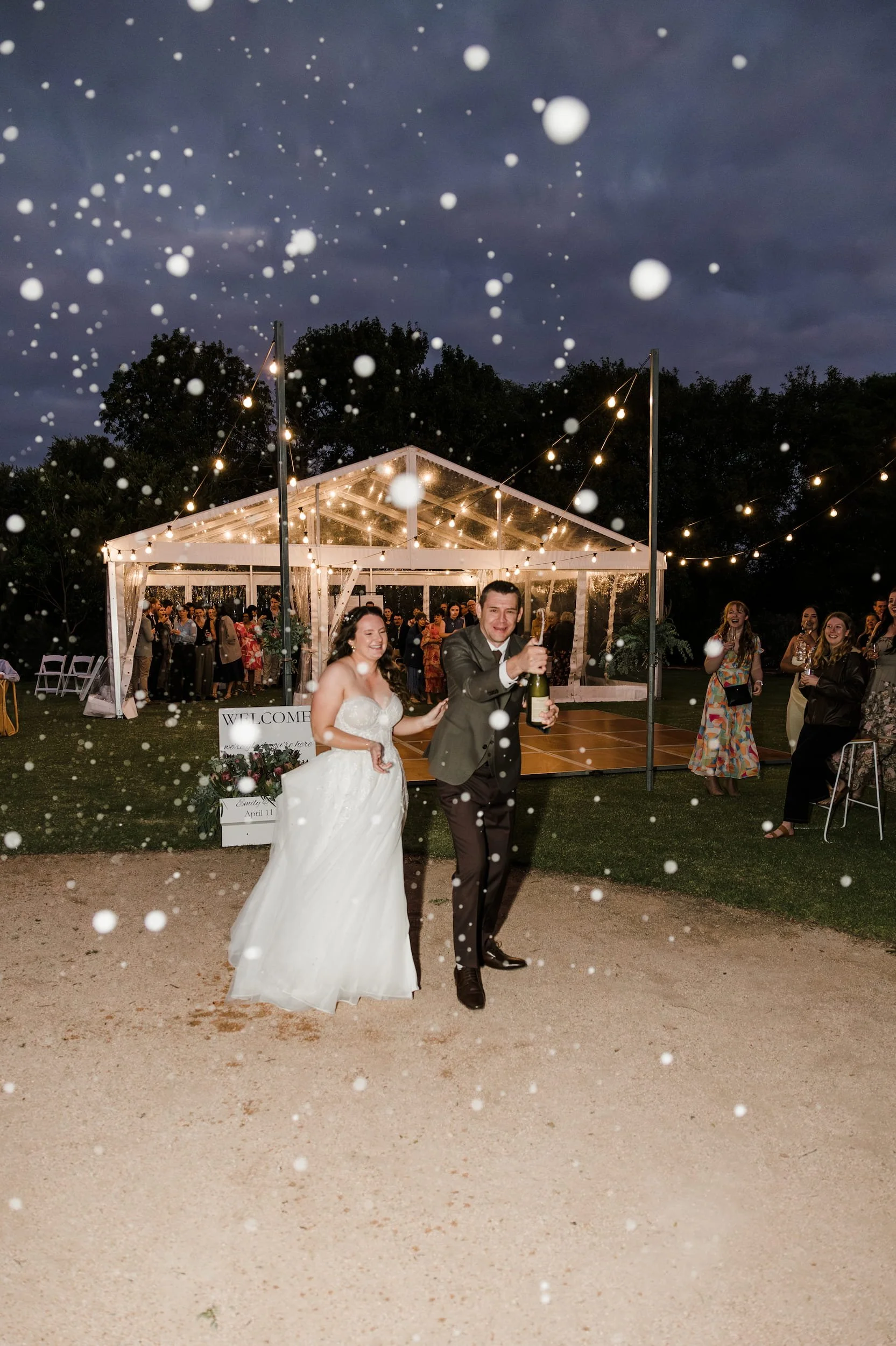
If you’re having more than a couple of speeches, consider splitting them into groups of two or three—perhaps one round after entrée and another after mains.
This gives the room a chance to breathe, keeps one long block of speeches from holding up the meal and lets guests chat, refill their glasses and move around in between. Give each speaker a time limit too. They may not stick to it exactly, but it helps your MC and venue plan around them.
Cut the cake while there’s time to serve it
If you’d like your cake served for dessert, ask the venue or caterer how much time the kitchen needs to cut and plate it.
You might cut it as part of your entrance or during the first round of speeches. You still get the celebratory cake-cutting moment, and the kitchen can quietly prepare it while everyone eats—rather than the cake finally being cut once half the room is already dancing.
Don’t leave the first dance too late
Guests often feel as though they’re not allowed to dance until you’ve had your first dance. If you want a lively dance floor, try not to leave that signal until too late in the evening.
And if a formal first dance isn’t your thing, that is completely fine. At the end of your speeches or thank-you toast, simply invite everyone onto the dance floor and ask your DJ or band to launch into something irresistible. Permission granted. Party started.
What could a relaxed wedding timeline look like?
This is only one example—not a template every wedding needs to follow—but it shows how the day can be broken up so you still get photographs of everything that matters without disappearing for the entire afternoon.
3:00 pm: Guests arrive; venue details and candid arrivals are photographed
3:30 pm: Ceremony
4:00 pm: Signing, confetti and unhurried congratulations
4:15 pm: Whole-group and family photos
4:45 pm: You join your guests for canapés and drinks
5:30 pm: Guests move into the reception while you take a short portrait wander
6:15 pm: Entrance and cake cutting
6:30 pm: Dinner begins; your reception suppliers eat at the same time as you
7:15 pm: First group of two or three speeches
Around sunset: A short portrait breather, moved earlier or later to suit the season
Afterwards: Final speeches or thank-you toast, then the first dance—or an open invitation to the dance floor
If you take your couple and wedding-party portraits before the ceremony, the post-ceremony part becomes even simpler: hugs, family photos, then straight to your own canapés.
Treat the timeline as a plan—not a test
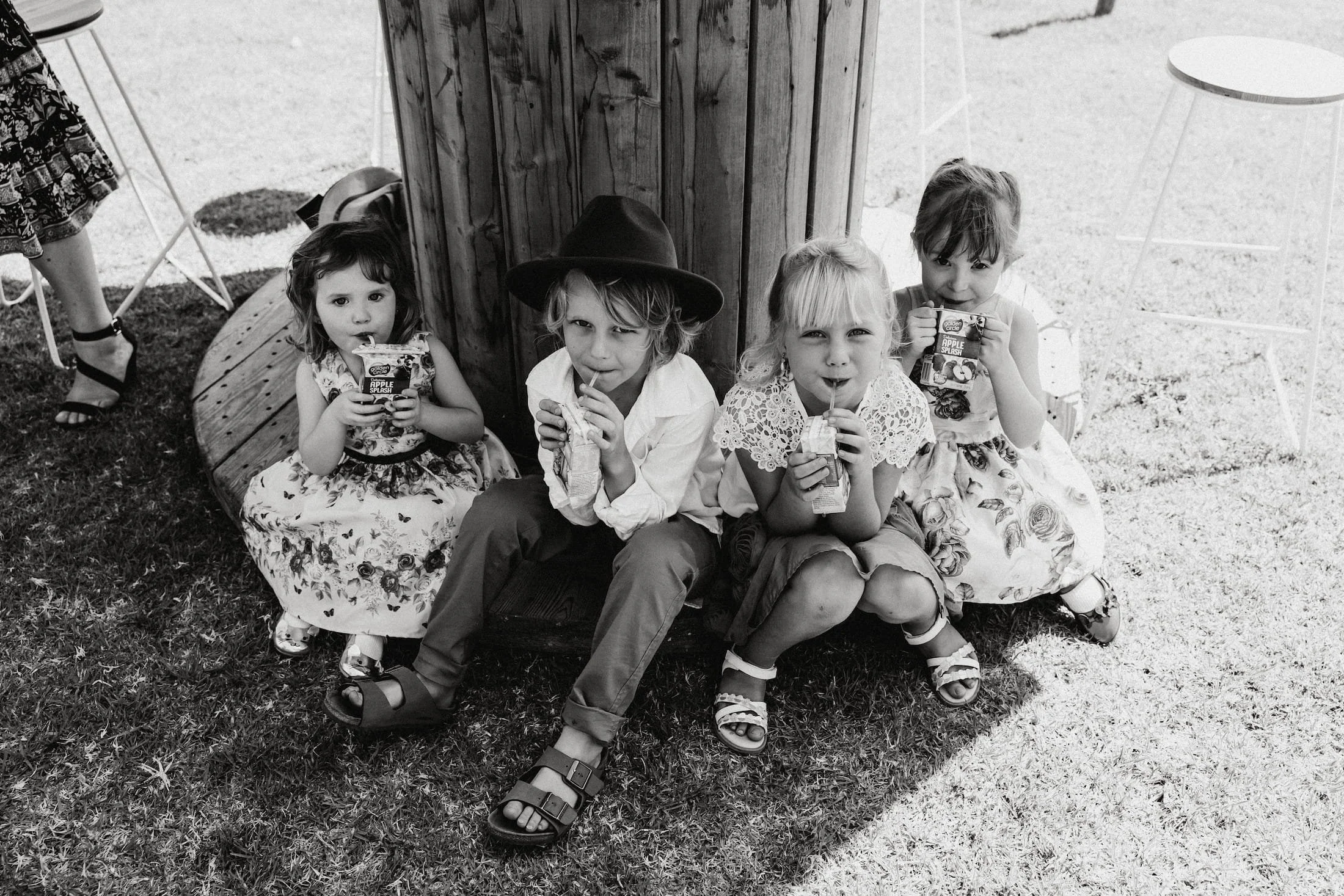
Even the most carefully planned wedding can run late because of weather, traffic, food, children, emotion or one gloriously rogue speech. That doesn’t mean anything has gone wrong.
Give your final timeline to the people helping the day run—particularly your venue coordinator, MC and key suppliers—and let them keep an eye on the clock. You should not have to spend your wedding managing everyone else.
An experienced team will know what can move, what can be shortened and what matters enough to protect. The timeline is there to support the day, not to turn it into a military operation.
Most importantly, make sure there is space in it for you to enjoy yourself. You should get to be part of your own wedding without missing out on the photographs that help you remember it.
If you’ve booked me, we’ll build your photography timeline together once your plans have taken shape. You don’t need to work it all out alone. And if you’re still deciding how much of the day you’d like photographed, my guide to choosing your wedding photography coverage is a handy next step.
Planning a wedding in South Australia and want a photographer who’ll help you make space for the photographs and the party? You can see my wedding photography and packages here, or tell me what you’re planning.
See more tips + tricks on the blog:



Planning a wedding?
I’ve photographed hundreds of Adelaide weddings over the past 15 years. If you’d like help planning your timeline, I’d love to help.

Not sure which wedding photography style feels right for you? This guide explores classic, editorial, documentary, natural and cinematic photography—helping you understand how each approach feels on the day, how much direction you might receive, and which one will make you think, “Yes. That’s what I want.”